Advocacy is often measured by the number of trainings conducted, stakeholders engaged, policy meetings attended, or reports submitted. Yet the most important question remains:
What changes after the advocacy ends?
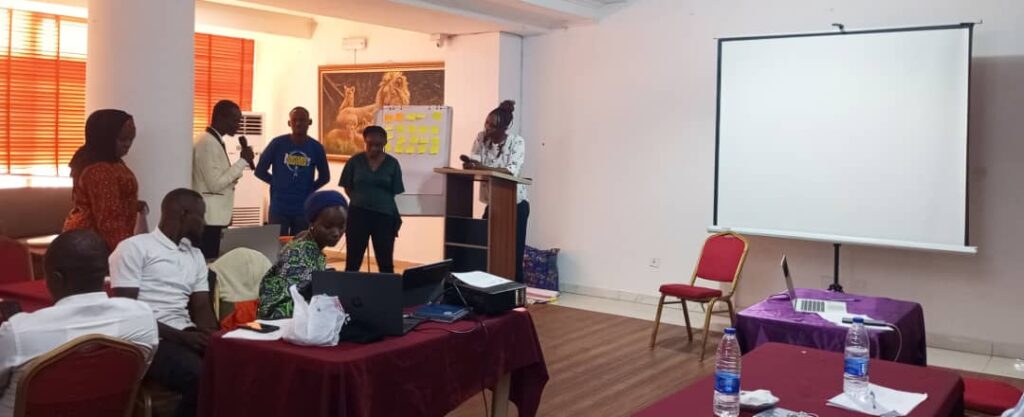
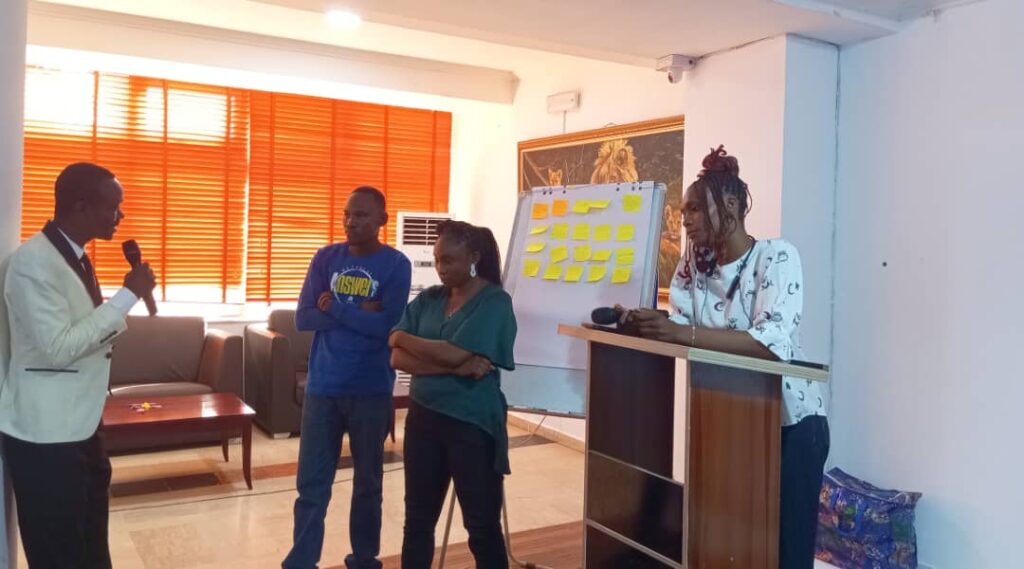
This question shaped another deeply reflective and strategic session at the ongoing training themed:
“Empowering OPD Advocates through Advocacy Engagement and Inclusive Development Training (Third Contact)”
The training continues to convene Organisations of Persons with Disabilities (OPD) leaders, advocates, and partners for strategic engagement on:
- inclusive advocacy,
- safeguarding,
- disability rights,
- policy engagement,
- ethical participation,
- and systems strengthening for sustainable impact.
Organised by JONAPWD in collaboration with Inclusive Friends Association (IFA), with support from CBM Global Disability Inclusion and the Ministry for Foreign Affairs of Finland, the engagement has consistently challenged participants to think beyond advocacy as an event and instead understand it as a long-term process of systems transformation.
One of the most impactful sessions focused on advocacy impact, policy reform, behavioural change, stakeholder engagement, and measuring sustainable inclusion outcomes.
The session reinforced that advocacy is not simply about speaking loudly. It is about creating measurable change within institutions, policies, attitudes, and communities.
Policies Can Either Protect Rights or Institutionalize Exclusion
One of the strongest themes from the session centered on the role of policies in shaping the everyday experiences of persons with disabilities.
The facilitator emphasized that policies are never neutral. They either create access or reinforce exclusion.
In her words:
“If you are in an office that doesn’t have a safeguarding policy, then you are more at risk.”
This statement highlighted how safeguarding policies create accountability structures that protect individuals within organizations and institutions.
Without those policies:
- abuse becomes harder to report,
- discrimination becomes easier to normalize,
- and institutions avoid responsibility.
The facilitator also shared a striking example of exclusionary institutional practices affecting persons with visual impairments.
She explained:
“If you go to First Bank, they will tell you that a visually impaired person is not supposed to own an ATM card. That is a policy.”
This example exposed a painful reality:
many discriminatory practices are not accidental — they are embedded within systems and procedures that were designed without persons with disabilities in mind.
The issue is not merely about ATM access.
It reflects a broader societal tendency to:
- undermine autonomy,
- deny independence,
- and make decisions on behalf of persons with disabilities rather than with them.
Participants were therefore encouraged to intentionally interrogate policies by:
- reviewing institutional frameworks,
- identifying barriers,
- challenging discriminatory clauses,
- and advocating for inclusive reforms.
The session reinforced that meaningful advocacy must move beyond awareness and begin influencing policy implementation and institutional culture.
Awareness Must Extend Beyond Advocacy Spaces
Another major lesson from the session was the importance of broad-based awareness creation.
The facilitator challenged participants to think beyond conference halls, stakeholder meetings, and technical discussions.
She asked participants to consider:
- cleaners,
- security personnel,
- transport workers,
- market sellers,
- and ordinary community members.
These groups, though often excluded from policy conversations, significantly shape the daily experiences of persons with disabilities.
The session emphasized that inclusion cannot succeed if awareness only exists among advocates and development practitioners.
True social change requires disability awareness to become part of everyday public consciousness.
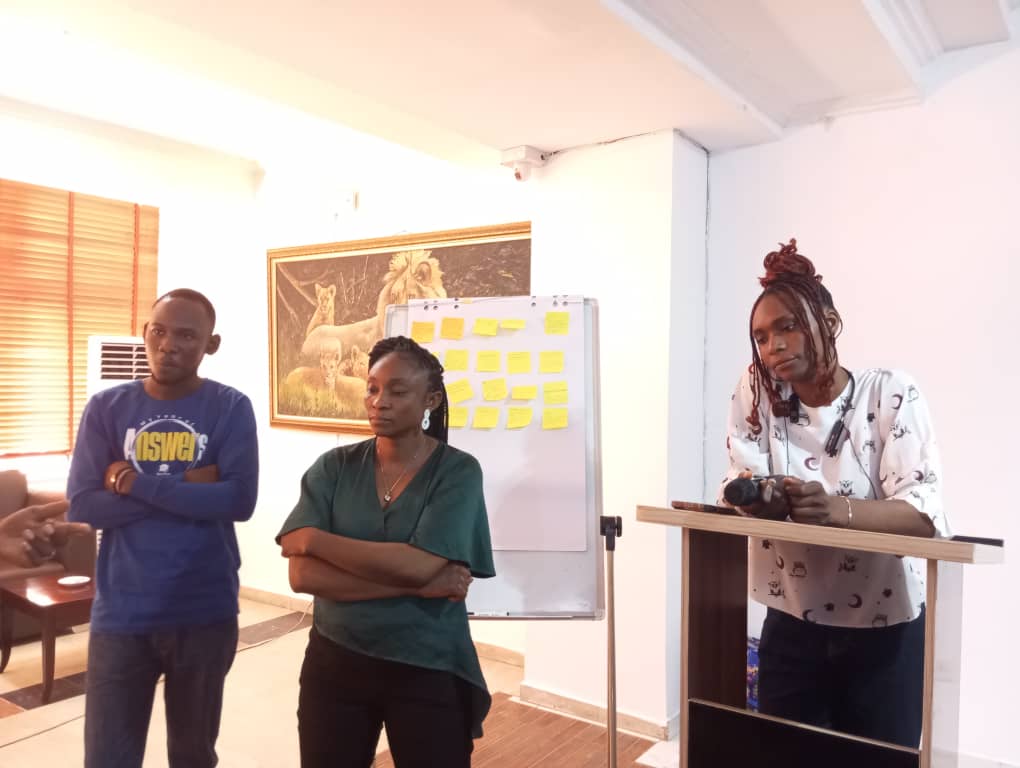
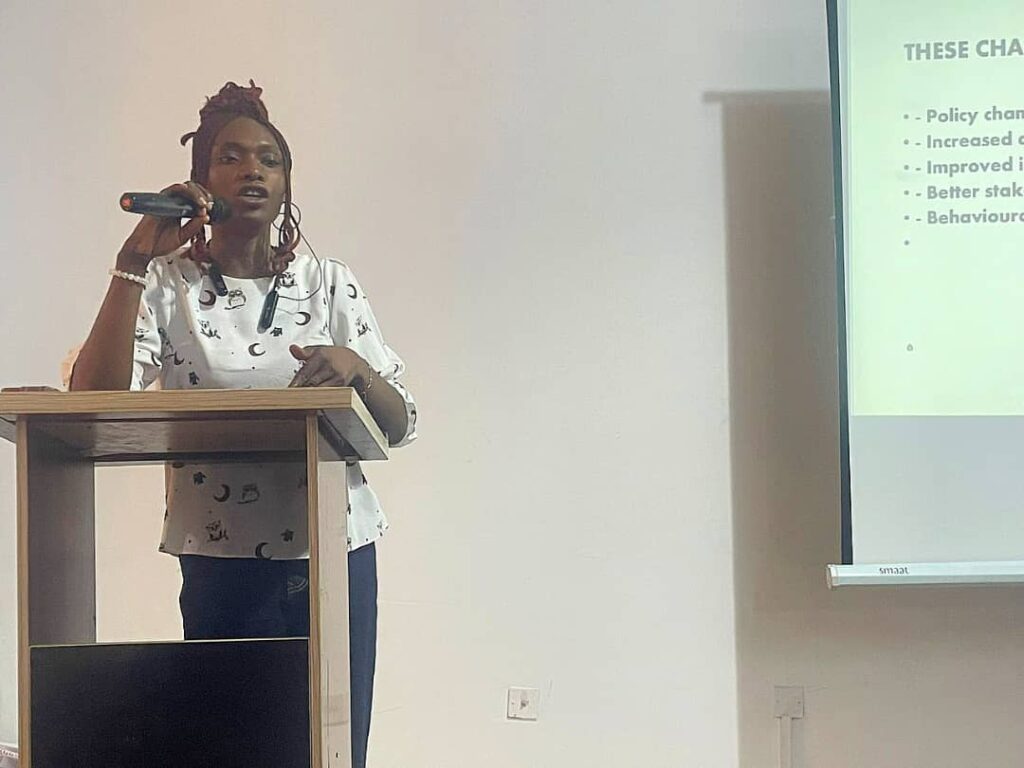
The facilitator highlighted the increasing importance of:
- multimedia advocacy,
- digital storytelling,
- social media engagement,
- accessible online content,
- and community-level sensitization.
Participants reflected on how accessible social media content now allows more persons with disabilities to engage with important policy and rights conversations across different platforms and communities.
This reinforced an important reality:
Advocacy becomes stronger when knowledge becomes accessible.
Advocacy Must Be Followed by Accountability
One of the most strategic parts of the session focused on the importance of follow-up after advocacy engagements.
The facilitator stressed that advocacy is not complete once:
- a meeting is held,
- a policy brief is submitted,
- or photographs are taken.
In her words:
“This is not about only training and evaluation. It’s after the training.”
Participants were challenged to think critically about what happens after stakeholder engagements.
For example:
- If advocates push for inclusion within government empowerment programmes,
- they must later verify whether persons with disabilities were actually included,
- accommodated,
- and meaningfully represented.
The session emphasized that many institutions initially respond positively during engagements but fail to implement commitments unless advocates maintain sustained engagement and monitoring.
This is why advocacy requires:
- consistency,
- follow-up,
- accountability mechanisms,
- and long-term relationship building.
The facilitator reminded participants that inclusion must become visible within systems and outcomes — not merely within speeches and meeting notes.
Advocacy Impact Exists in Stages
Another major takeaway from the session was the explanation of advocacy impact as a gradual and layered process.
Participants explored the relationship between:
- outputs,
- outcomes,
- and long-term impact.
The facilitator explained that outputs are the immediate activities:
- trainings,
- advocacy visits,
- stakeholder engagements,
- policy reviews,
- and sensitization campaigns.
Outcomes, however, reflect the immediate behavioural or institutional responses generated by those activities.
But the ultimate goal is long-term impact:
- sustained policy reform,
- increased inclusion,
- reduced stigma,
- improved representation,
- and systemic transformation.
The facilitator encouraged participants to constantly ask:
What happens outside the room after the meeting ends?
This question became central to the discussion on sustainable advocacy.
Long-Term Impact Requires Patience and Persistence
Participants reflected on how many advocacy goals require years of sustained effort before visible transformation occurs.
The facilitator shared examples involving:
- policy reforms,
- committee representation,
- disability-inclusive digital literacy programmes,
- and increased participation of marginalized disability clusters.
One particularly powerful example referenced advocacy efforts around the National Digital Literacy Framework, which initially excluded persons with disabilities.
Following sustained advocacy engagement:
- persons with disabilities were incorporated into policy amendment committees,
- digital literacy programmes were created for young persons with disabilities,
- and partnerships emerged to strengthen disability inclusion within digital spaces.
The facilitator emphasized that these changes represent true advocacy impact because they move beyond conversation into institutional action.
Participants were reminded that real systems change often happens gradually and requires:
- persistence,
- monitoring,
- strategic partnerships,
- and consistent advocacy pressure.
Behavioural Change Is One of the Strongest Indicators of Impact
The session also explored behavioural change as one of the clearest indicators of successful advocacy.
Participants reflected on how many harmful attitudes toward persons with disabilities are rooted in ignorance rather than intentional hostility.
The facilitator shared a deeply reflective personal example:
“Before I came into this space, if I wanted to describe a deaf person, I used to say ‘deaf and dumb.’”
She explained how increased exposure, learning, and interaction transformed her understanding of disability-sensitive language.
This discussion reinforced that advocacy should influence:
- language,
- attitudes,
- assumptions,
- and interpersonal behaviour.
Another participant reflected on how the training reshaped her understanding of consent and respectful support when interacting with wheelchair users.
Rather than automatically pushing someone’s wheelchair, she explained that advocates should first ask for permission and respect the individual’s autonomy.
The facilitator further discussed how many people unintentionally violate boundaries while believing they are being helpful.
Participants examined examples involving blind persons being grabbed suddenly by strangers attempting to “assist” without communication or consent.
The session emphasized that respectful support begins with asking rather than assuming.
Reducing Stigma Is a Long-Term Impact
One of the most intellectually compelling discussions focused on stigma reduction, particularly around psychosocial disabilities.
Participants reflected on scenarios where individuals with psychosocial disabilities interact within public spaces without facing discrimination or fear.
The facilitator explained that stigma reduction cannot happen instantly through a single awareness session.
Instead, it requires:
- continuous exposure,
- lived experience interactions,
- repeated learning,
- and gradual behavioural transformation.
She openly acknowledged that even after attending trainings herself, true understanding only deepened through sustained interaction with persons with lived experiences.
This honesty reinforced a powerful lesson:
Real inclusion requires unlearning.
Participants discussed how fear, stereotypes, and misinformation often shape societal reactions toward persons with psychosocial disabilities.
The session emphasized that reducing stigma is one of the clearest examples of long-term advocacy impact because it reflects genuine behavioural and cultural transformation.
Quantitative Success Is Not Enough
The training also explored the distinction between quantitative and qualitative indicators in advocacy work.
The facilitator cautioned participants against becoming overly focused on numbers alone.
She explained that quantitative indicators focus on figures:
- number of trainings,
- number of participants,
- number of stakeholders engaged,
- or number of awareness campaigns conducted.
Qualitative indicators, however, focus on:
- behavioural change,
- increased understanding,
- improved inclusion,
- institutional responsiveness,
- and lived experiences.
As participants summarized during the session:
- Quantitative indicators measure how many.
- Qualitative indicators measure what changed.
The facilitator stressed that while large numbers may appear impressive in reports, true advocacy success lies in the quality and sustainability of impact.
This becomes especially important within disability-inclusive programming where accessibility and reasonable accommodations require:
- slower pacing,
- more intentional facilitation,
- sign language interpretation,
- accessible communication,
- descriptive teaching,
- and individualized engagement.
Participants reflected on how meaningful inclusion sometimes requires engaging fewer people more deeply rather than prioritizing large but inaccessible outreach numbers.
Inclusion Must Become Visible
Another major theme throughout the session was representation.
Participants discussed how many disability-related programmes still fail to adequately include:
- persons with psychosocial disabilities,
- persons with intellectual disabilities,
- and other marginalized disability clusters.
The facilitator emphasized that true progress means seeing increased representation across all disability groups within:
- advocacy spaces,
- leadership structures,
- policy discussions,
- and community programmes.
Participants were challenged to assess whether their advocacy efforts are actually expanding participation and visibility for underrepresented groups.
The session reinforced that inclusion cannot remain symbolic.
It must become measurable and visible within systems, structures, and opportunities.
Real Advocacy Is Measured by Transformation
Ultimately, the session reinforced one central truth:
Advocacy is not successful because activities happened.
It is successful because systems changed.
Real advocacy impact is reflected in:
- inclusive policies,
- reduced stigma,
- increased representation,
- behavioural transformation,
- accessible systems,
- and meaningful participation of persons with disabilities.
The training served as a reminder that sustainable inclusion requires more than passion and awareness campaigns alone.
It requires:
- persistence,
- accountability,
- strategic engagement,
- follow-up,
- policy reform,
- behavioural change,
- and long-term commitment.
Because advocacy is not merely about being heard.
It is about ensuring that what is heard produces lasting and measurable change.