Can an election truly be called credible if accessibility is never measured, exclusion is buried in footnotes, and resilience is celebrated more than rights?
Nigeria’s electoral accountability system rests heavily on Civil Society Organizations (CSOs) and the media, yet both often overlook disability inclusion as a core test of integrity. Observation frameworks typically treat accessibility as a side issue rather than a benchmark of legitimacy, leaving specialized disability groups to carry the burden of scrutiny. This creates a strategic blind spot: elections may be declared “peaceful and orderly” even when systemic barriers prevent many citizens with disabilities from participating equally. The brief’s sharpest insight is that credibility is defined by what gets measured—if accessibility is absent from core metrics, exclusion becomes invisible. Inclusion, therefore, must move from peripheral reporting to a non-negotiable standard embedded in every observer checklist and media situation room.
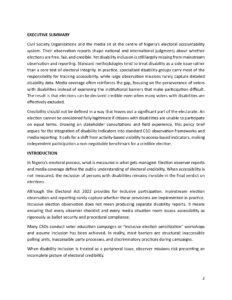
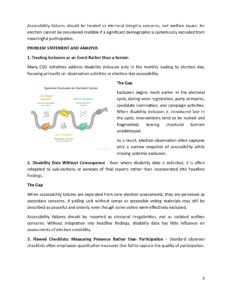
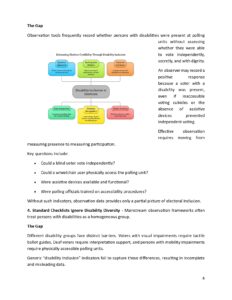
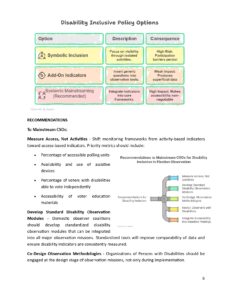
A deeper structural problem lies in when and how inclusion is addressed. Many initiatives treat disability inclusion as an election-day event rather than a full electoral-cycle system—ignoring early-stage barriers in voter registration, party primaries, candidate nomination, and campaigns. Even when disability data is collected, it is frequently relegated to annexes instead of influencing headline conclusions, rendering it politically inconsequential. Standard checklists compound the problem by measuring presence instead of participation—recording whether persons with disabilities were at polling units, but not whether they voted independently, secretly, and with dignity. By failing to account for disability diversity and by rarely recruiting observers with disabilities themselves, observation missions risk misdiagnosing exclusion as minor inconvenience rather than structural disenfranchisement.
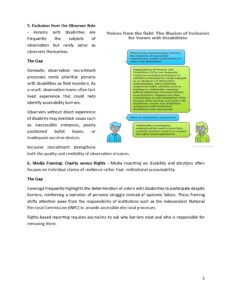
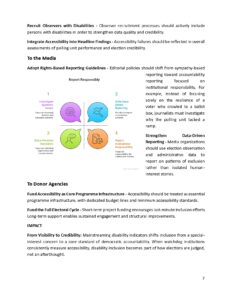
The media ecosystem reinforces this gap through framing. Coverage often spotlights individual perseverance—voters overcoming obstacles—rather than interrogating institutional accountability, particularly the responsibilities of electoral bodies. This charity-based narrative subtly shifts blame away from systemic design failures and toward personal struggle. The brief’s most strategic shift is conceptual: accessibility failures should be classified as electoral irregularities, not welfare concerns. It calls for standardized disability observation modules, co-designed methodologies with Organizations of Persons with Disabilities, integration of accessibility into headline credibility findings, long-term funding across the full electoral cycle, and rights-based, data-driven reporting. The ultimate impact is transformative: moving disability inclusion from visibility to credibility—where elections are judged not simply by turnout or calm, but by whether all citizens can participate on equal terms.
Read the full policy brief here: Final Draft_ POLICY BRIEF 3_ the Blindspot in the watchdog’s eye