Breaking the Glass Ceiling: JONAPWD Unveils Landmark Assumptive Data on Persons with Disabilities in Nigeria
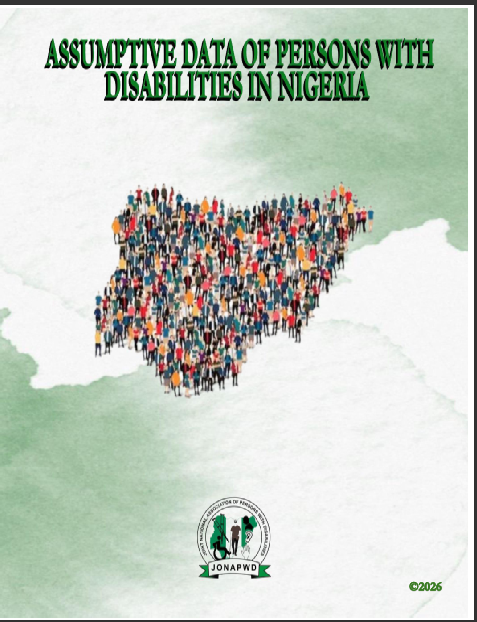
In a historic move toward evidence-based advocacy, the Joint National Association of Persons with Disabilities (JONAPWD) has officially released its exploratory disaggregated data report.
https://jonapwdng.org/wp-content/uploads/2026/03/2025-Assumptive-Disability-Disaggregated-Data-2.pdf
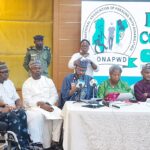
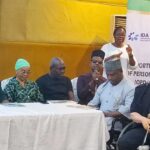
The press conference, attended by high-ranking government officials, development partners, and disability rights advocates, marks the end of decades of “conjecture and fragmented information” regarding Nigeria’s disability community.
The report applies global benchmarks to 2025 projections from the National Population Commission, estimating that approximately 35 million Nigerians live with disabilities.

The Power of Numbers
The disaggregated data provides a granular look at the community:
- Geographic Density: Kano State leads with 2.5 million Persons with Disabilities, followed by Lagos with 2.1 million.
- Cluster Distribution: Physical disability remains the largest cluster (8.2 million), followed by the Deaf community (7.7 million).
- Gender Demographics: The report identifies 17.6 million males and 17.2 million females within the community.


Key Voices & Notable Quotes
“For decades, the disability community has operated without reliable, baseline demographic information… Inclusion remains an aspiration rather than an achievable standard without appropriate data.”
— National President, JONAPWD (Comrade Abdullahi A. Usman)
The President emphasized that while the report is a vital starting point, gaps remain in data concerning children and invisible disabilities, such as mental health conditions and psychosocial impairments.
“Data is the foundation of effective planning… This document represents a significant milestone for active efforts to advance inclusive development. I will present this database to the government to assist Mr. President in achieving his Renewed Hope agenda.”
— Mr. Issa Abba, Senior Special Assistant (SSA) to the President on Special Needs and Equal Opportunities
Representing President Bola Ahmed Tinubu, Mr. Abba noted that the numerical strength of the disability community (over 35 million) is a formidable force that must be integrated into national success strategies.
“When we talk about data, data is everything. Without data, you cannot plan. If you keep doing empowerment without data, you cannot really tell who you are giving that empowerment to.”
— Fatima Abubakar Doki, National Commission for Persons with Disabilities (NCPWD)
Ms. Doki applauded JONAPWD for “taking the bull by the horns,” noting that the Commission often faces challenges in providing concrete answers to international visitors due to a lack of a comprehensive national database.
The National Population Commission was very excited to partner with JONAPWD. Comrade Adeyo Onah Daniel, Secretary to the National Population Commission mentioned the following:
On the Technical Rigor
“I want to commend the technical team for a wonderful job. The Commission is proud to have supported the process of coming about this disaggregated data, which is fundamental for inclusive planning.”
— Comrade Adeyi Onah Daniel, Secretary to the National Population Commission (NPC)
On the Data’s Credibility
“This effort breaks a major glass ceiling. For the first time, we have a structured and disaggregated data set that provides a much-needed empirical foundation for the 35 million Nigerians living with disabilities.”
— Comrade Adeyi Onah Daniel, Secretary to the National Population Commission (NPC)
The Authority Clause
“This data is not merely an estimate; it is the result of a strategic collaboration with the National Population Commission (NPC). As the statutory body transitioned toward the 2025 census projections, the NPC granted JONAPWD the technical authority to utilize and disaggregate national figures, ensuring that for the first time, the 35 million Nigerians with disabilities are counted with precision rather than conjecture.”
— Comrade Adeyi Onah Daniel, Secretary to the National Population Commission (NPC)
A Call to Action
The report highlights a critical gender dimension, noting that women with disabilities face multi-layered marginalization, including economic exclusion and cultural silence. Speakers collectively urged the government and development partners to move beyond “visible” impairments and adopt a more “embodied” narrative of disability that includes injuries from road accidents, chronic illnesses, and psychosocial conditions.
WATCH THE VIDEO HERE: https://www.youtube.com/live/rG0b8Sl3Vro?si=UH9-O607v829CkSt
Related Posts