The future of an inclusive city is determined long before a road opens, a transport service begins or a digital platform goes live. It takes shape when priorities are selected, budgets approved, contracts awarded and decisions made about whose needs count.
For the Joint National Association of Persons with Disabilities (JONAPWD), influencing these decisions is an essential responsibility of disability leadership. Infrastructure and services must enable persons with disabilities to participate in society with dignity, independence and equal opportunity. Achieving this requires their representative organisations to help shape investment from its earliest stages.
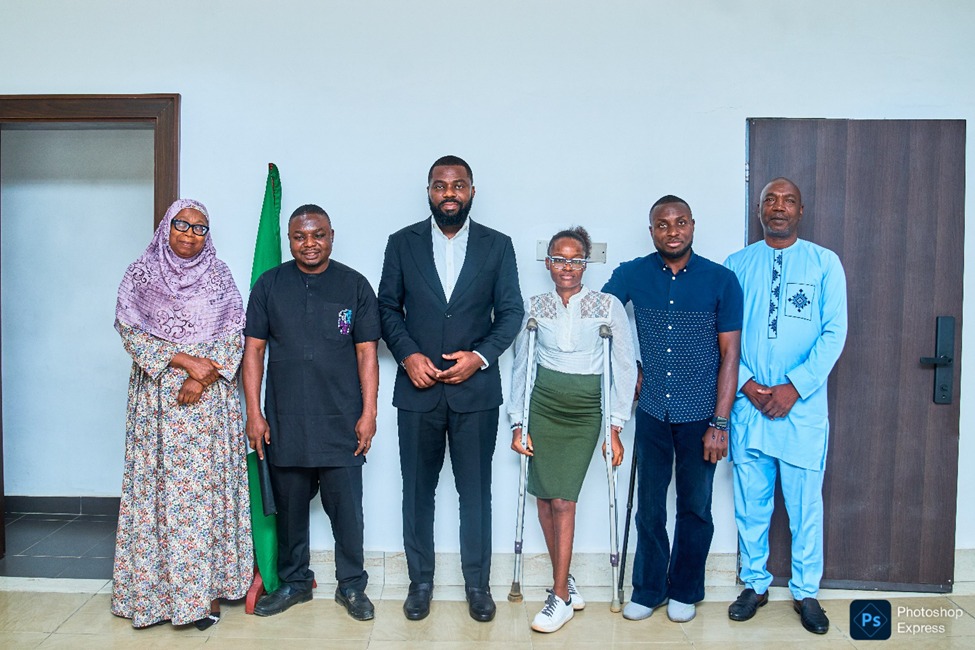
This perspective informed JONAPWD’s participation in “Inclusive Cities and the Future of Urban Investment: Financing Disability Inclusion at Scale,” held from 4–6 November 2026 at Wilton Park, West Sussex, United Kingdom. Convened in partnership with the UN Global Disability Fund and the United Kingdom’s Foreign, Commonwealth and Development Office, in association with the Government of Mexico, the dialogue examined how financing can support inclusive urban development across everyday life, climate resilience and crisis recovery.
JONAPWD’s invitation created an opportunity to bring Nigerian disability movement perspectives into a global conversation about capital, institutional responsibility and public value. The programme explored how inclusion could become a consistent investment requirement, supported by appropriate financing, meaningful OPD participation and measurable outcomes.
Bringing Disability Leadership into the Investment Conversation
JONAPWD’s contribution to this agenda rests on its position within Nigeria’s disability movement and its engagement with the institutions responsible for delivering inclusion. As a national umbrella organisation, it connects community experience with policy advocacy, programme implementation and demands for accountability.
That connection matters because investment performance is experienced differently by those who finance infrastructure and those who depend on it. A completed transport facility may satisfy a construction milestone while remaining unusable for a passenger with a disability. A digital service may record increased registrations while excluding people unable to navigate its interface. An emergency warning may reach thousands of devices without providing information that every resident can understand and act upon.
JONAPWD is advancing a more demanding understanding of success: investment must be assessed through the opportunities it creates and the barriers it removes.
The Wilton Park dialogue provided a valuable cross-learning environment for strengthening this approach. Exchanges across government, development finance, city administration and the disability movement deepened the organisation’s understanding of how investment incentives, project preparation, procurement and risk allocation affect inclusion. These lessons will inform how JONAPWD develops evidence, engages partners and positions disability priorities within existing investment processes.
Giving Practical Expression to the UNCRPD
This direction is grounded in the United Nations Convention on the Rights of Persons with Disabilities (UNCRPD). Article 4(3) requires States Parties to closely consult and actively involve persons with disabilities, through their representative organisations, in decisions concerning them. Applied to urban development, this establishes a strong basis for participation in the policies and decisions shaping city infrastructure and services.
Article 9 addresses accessibility across the physical environment, transportation, information, communications and facilities and services open or provided to the public. It also addresses accessibility responsibilities concerning private entities offering such facilities and services. This makes disability inclusion relevant to the whole urban ecosystem, including public authorities, operators, developers and digital providers.
Other Convention provisions reinforce the connection: Article 11 concerns situations of risk and humanitarian emergencies; Article 19 addresses independent living and community inclusion; Article 21 concerns access to information; Article 27 addresses work and employment; Article 31 concerns statistics and data collection; and Article 32 addresses international cooperation. Together, they provide a framework for understanding why transport, housing, digital systems, livelihoods and resilience must be considered as connected dimensions of inclusion.
For JONAPWD, the practical task is to bring these commitments into the decisions that govern expenditure and implementation. OPD leadership must have the information, resources and institutional access needed to influence those decisions.
Lagos as a Foundation for Locally Led Change
JONAPWD is positioning its RICH intervention in Lagos State as a practical foundation for advancing this agenda. Using the Lagos State Resilience Plan as an entry point, the intervention focuses on strengthening disability inclusion within city governance, municipal data and public feedback.
Its strategic value lies in connecting three elements: community evidence, institutional decisions and financing.
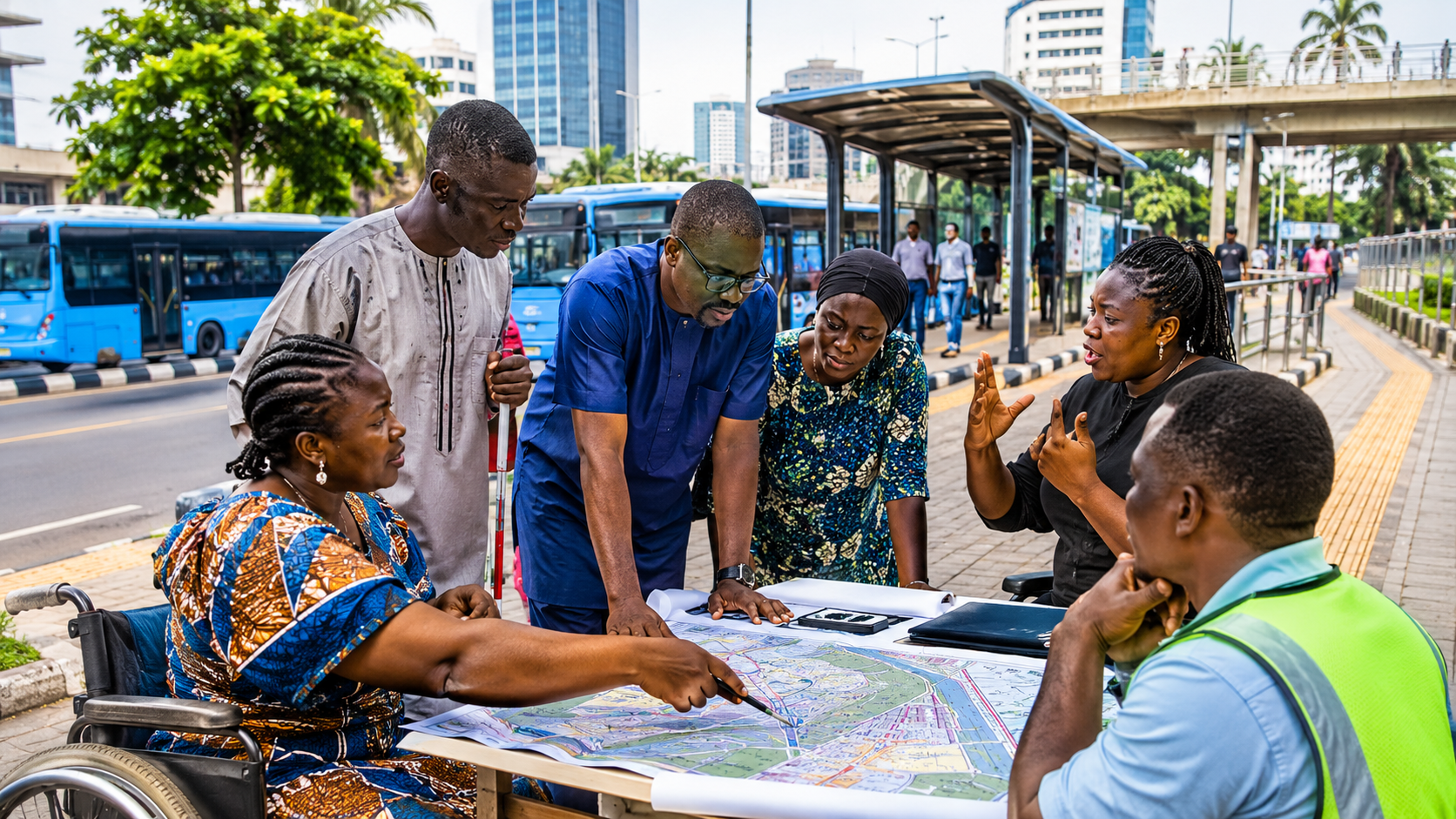
Participatory accessibility mapping can identify where residents encounter barriers. Community validation can establish which problems are most urgent and how they affect different disability groups. Engagement with responsible authorities can then connect those findings with planning, budgets, procurement and service improvement.
This approach gives data a clear purpose. An accessibility map should help an institution identify what must change. A public dashboard should make responsibilities and progress easier to follow. A feedback mechanism should enable residents to obtain a response and track whether corrective action occurs.
Climate vulnerability and disaster preparedness provide important settings for testing these governance arrangements. They expose whether information reaches everyone, whether assistance is available and whether essential services remain accessible during disruption.
JONAPWD’s leadership therefore centres on building the connection between evidence and action, while ensuring that persons with diverse disabilities help define priorities and assess results.
Connecting Urban Inclusion with the SDGs
The approach also gives practical expression to the Sustainable Development Goals.
SDG 11 provides the clearest urban connection. Target 11.2 calls for safe, affordable, accessible and sustainable transport, explicitly recognising persons with disabilities. Target 11.7 addresses universal access to safe, inclusive and accessible public spaces. These commitments offer concrete reference points for assessing how city investment changes everyday access.
The governance dimension connects directly with, particularly inclusive and responsive decision-making. Its indicators explicitly consider disability in institutional representation and public perceptions of participation. This reinforces the importance of assessing whether persons with disabilities influence decisions, alongside whether they attend consultations.
JONAPWD’s approach also connects with the wider objectives of SDG 8 on decent work, SDG 9 on infrastructure, SDG 10 on reducing inequalities, SDG 13 on climate action and SDG 17 on partnerships. Accessible transport supports employment; inclusive digital systems support economic participation; responsive public services reduce exclusion; and disability-led partnerships strengthen implementation.
These connections provide a basis for shared accountability. Disability inclusion becomes part of how institutions assess development performance across sectors.
Financing Inclusion While Protecting Public Value
A central lesson from the dialogue is that different inclusion needs require different financing responses.
Independent advocacy, community participation and early evidence generation require sustained support. Infrastructure needs investment alongside maintenance and operating budgets. Essential services require affordability measures. Commercially viable improvements may attract private investment, while other interventions depend on public or concessional resources because their social value exceeds their financial return.
JONAPWD’s strong intentions to engage with private actors can help identify specific opportunities: accessible customer journeys, improved service design, inclusive procurement and products informed by user testing. These partnerships should include fair payment for OPD expertise and clear commitments to implementation.
Commercial interest, however, cannot determine whose rights receive attention. Public responsibility remains essential, particularly for residents with limited purchasing power and people requiring substantial support.
Making Digital Transformation Responsive to Persons with Disabilities
As cities digitise services, OPDs must also influence the systems through which residents register, authenticate their identity, make payments, obtain information and seek assistance.
The Universal Digital Public Infrastructure Safeguards Framework offers a useful foundation for examining risks involving discrimination, unequal access, privacy, autonomy and inadequate remedy. It recognises that exclusion can arise from institutional arrangements as well as technology, including situations where people have no alternative means of accessing essential services.
JONAPWD’s emphasis on disability-inclusive data and public feedback is positioning to help bring these concerns into city governance. Digital performance should include whether people can complete a service journey safely, affordably and with control over their personal information.
Measuring Impact Through Everyday Life
The significance of this work will ultimately be demonstrated through changes residents can experience. The following examples describe prospective impact pathways, rather than verified beneficiary stories.
For a worker with a mobility disability, meaningful change may begin with a dependable journey to work. Mapping the route can reveal how an obstructed walkway, inaccessible crossing and unusable boarding point combine to restrict employment. When that evidence informs coordinated corrections, the outcome can be assessed through more reliable journeys, lower additional transport costs and greater employment choice.
For a woman trading in a local market, inclusion may require accessible entrances, suitable trading space, sanitation and usable payment services. A coordinated response could increase her independence and strengthen business stability. A credible impact account would examine income alongside safety, privacy and control over business decisions.
For a resident facing a flood emergency, the decisive outcome is receiving a warning in an understandable format and being able to act on it. Effective assessment must connect communication with evacuation routes, assistance and shelter access.
For a person using a digital public service, success may mean completing an application without surrendering privacy to an intermediary. For a community, it may mean seeing a repeatedly reported barrier become a funded and verified correction.
These stories require evidence. JONAPWD’s impact documentation traces the original barrier, community priorities, institutional response, resources committed and change experienced over time. Unresolved problems must remain visible alongside achievements.
Building Leadership Across the OPD Movement
JONAPWD’s leadership also creates opportunities for other OPDs to enter urban investment conversations with greater confidence and influence.
This requires accessible learning on public finance, procurement, project preparation and digital governance. It requires partnerships with engineers, planners, researchers and financing specialists, with representative organisations retaining leadership over disability priorities. It also requires resources for participation, including reasonable accommodation, accessible information and fair compensation for expertise.
Our leadership in this sense will sufficiently reflect the diversity of the movement. Women, young people, persons with intellectual and psychosocial disabilities, people requiring substantial support and residents of underserved communities must have meaningful opportunities to shape the agenda.
The priority is to holistically strengthen an inclusive community capable of influencing investment across institutions and locations. Technical capability should support representative authority and deepen accountability to communities.
From Participation to Demonstrable Influence
JONAPWD is taking forward the Wilton Park learning as an opportunity to strengthen disability-led urban governance in Nigeria. Its Lagos intervention provides a practical setting for testing how community evidence can inform institutional priorities, attract appropriate partnerships and support accountable expenditure.
Progress will require a clear chain from participation to decision, from decision to resources, and from resources to improved access.
By connecting the UNCRPD, the SDGs and the experience of persons with disabilities, JONAPWD is advancing a leadership agenda in which OPDs help determine how cities develop and hold institutions accountable for the lives those investments are intended to improve.