PROTOCOL
Our host, JONAPWD president, Alhaji Abdullahi Usman Aliyu. Distinguished leaders andfriends of the community, good morning.
If we want to know where we began to dry off, we must remember where the rain began to beat us.
The struggle towards the disability Act has been a long and torturous one. Community and allies spent years organising, making the case for a national disability law and insisting that Nigeria give domestic effect to the rights recognised in the United Nations Convention on the Rights of Persons with Disabilities.
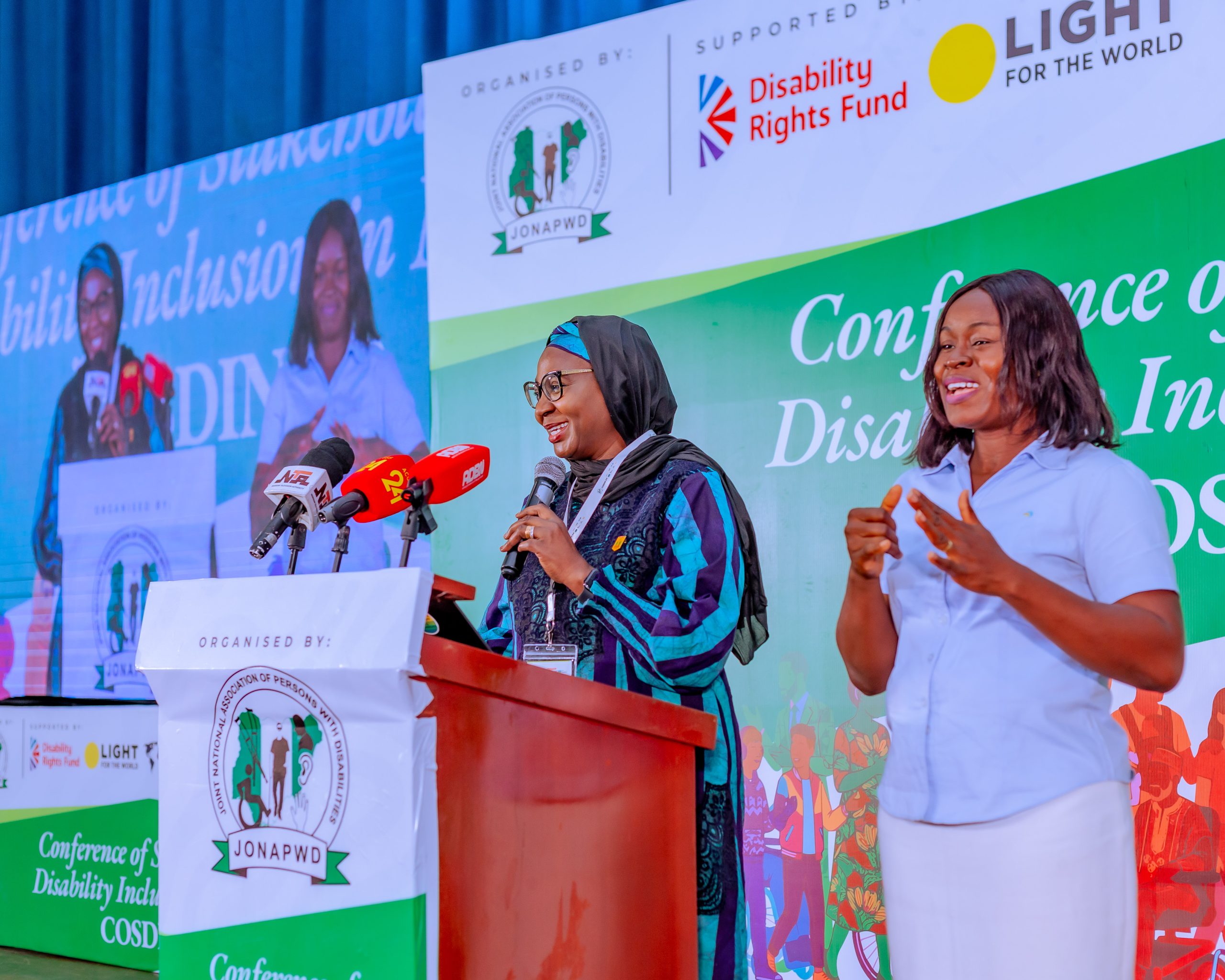
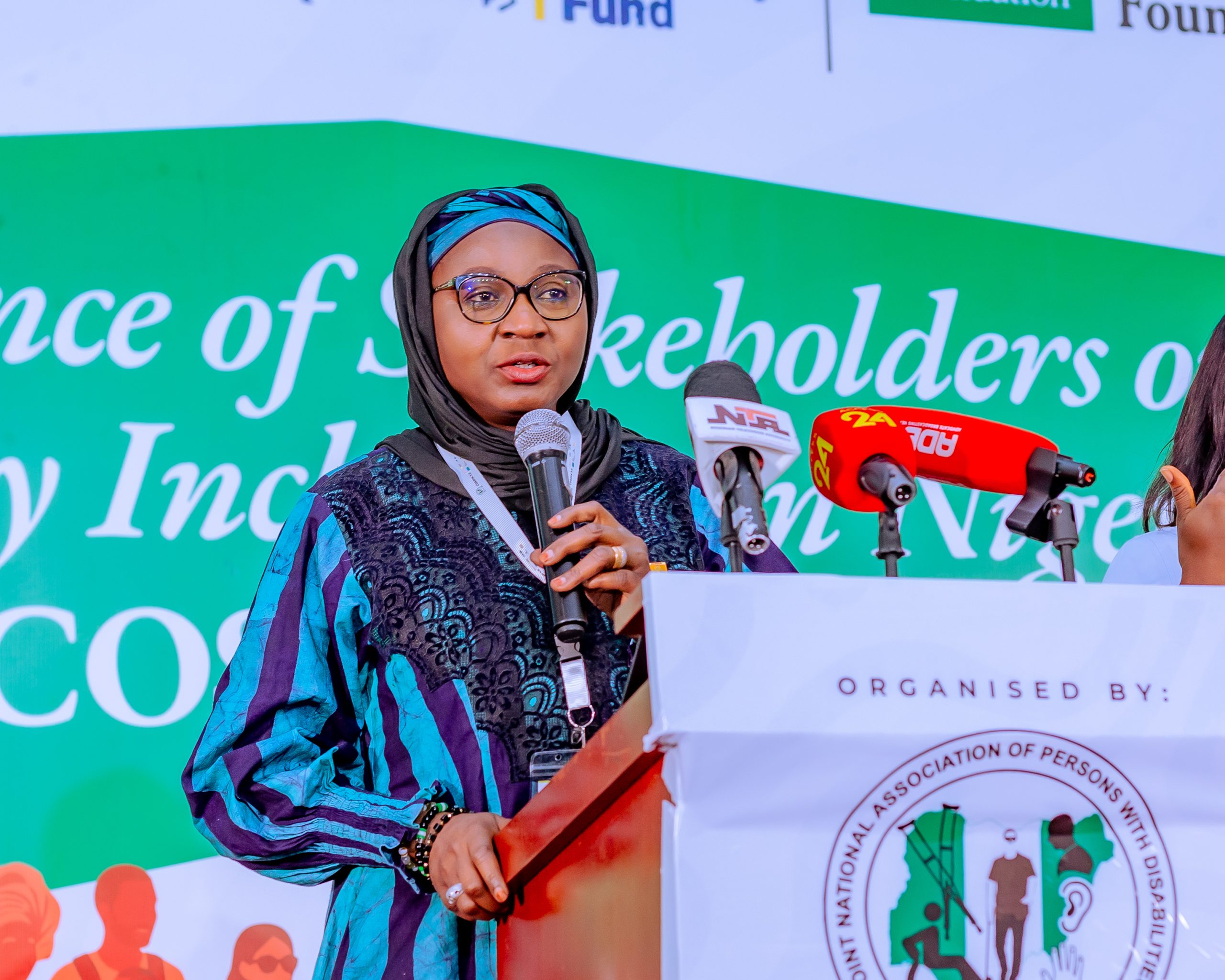
They kept at it through delays and disappointments. JONAPWD was also finding its feet as a national umbrella body. As I remember it, the boundary between elected leadership and the secretariat’s technical work was often unclear. Elected leaders draw their authority from members. They set direction and answer to the movement. A professional secretariat carries that mandate into the daily work of managing grants, keeping records, gathering evidence and following through with partners. Each needs the other. When both understand where their authority comes from and what they owe each other, the organisation can withstand a change of leadership and keep its promises to members. In those early years, the campaign for the law gave us a shared destination. Look at what the community has achieved today:
Persistence and partnership, helped secure the Discrimination Against Persons with Disabilities (Prohibition) Act, 2018, which received presidential assent in January 2019. digitallibrary.un.org
Today, JONAPWD’S secretariat wins grants. Its leaders ask for better data and evidence that the law is being implemented. Members of the disability community serve on boards and in presidential advisory roles. States have passed disability laws. Women with Disabilities are convening, organising through state-level structures and taking up leadership within the movement. Seven of JONAPWD’s thirteen National Executive Council members were women at the time of that account. Young persons with disabilities are beginning to emerge as key change champions across the 36 states and the FCT. But as we say, life and challenges are like five and six. They go together. So let us celebrate how far we have come and be honest about the work ahead.
Almost eight years after, and three years post moratorium, has the law led to accountability and transformed space?
Imagine preparing for a job interview, knowing you can do the work, and arriving to find that no interpreter has been arranged. You go home without ever having had the chance to show what you can do. Imagine running for office and being asked why you dared to- simply because of your disabality?
When we ask whether the Disability Act is changing lives, these kinds of experiences are where I would like to begin.
Reality Check: What do Accountability and Leadership Look Like?
In reality check:
“The law is really the floor not the ceiling of the ambition. Yes, it is a > beautiful firm ground to stand on but it is not the house to give the shelter we need.”
While the pathway for holding the state to account is now clearer, there are still fundamental questions to be asked and answered:
- Who is effectively monitoring implementation of the law?
- Who is asking whether the budget matched the promise?
- Where could someone turn when a public institution denied them access?
- What are the consequences for lack of fidelity to the Act?
- What is the state of our families – care and support wise
For JONAPWD, accountability (the duty of care to use resources equitably and justly for the good of all) and leadership – (the ability to inspire oneself to inspire others to be just), should run in three directions:
1.Accountability and leadership should begin at home, 2.extend to the State and 3. be tested in the everyday lives of persons with disabilities in society. JONAPWD answers to its members for how it represents them and uses its resources.
Government answers to citizens for implementing disability rights. Communities help identify barriers, verify what has changed and demand a response.
State accountability is about what government owes citizens. Federal institutions should implement the Discrimination Against Persons with Disabilities (Prohibition) Act, 2018, and states that have enacted disability laws should show how they are putting them into practice. Citizens should know which agency is responsible, what it has budgeted and spent, when it will remove identified barriers, and where they can go if a service remains inaccessible.
Community accountability means that JONAPWD’s chapters and disability clusters listen to the people they represent and report back on what they did with what they heard. Women, young people, people in rural communities and those with less visible disabilities should have accessible and safe ways to shape priorities and raise concerns. Their experience also tells us whether a system works.
Markers of a system that works and is accountable for disability
Employment is a practical test of all three. Employment gives us a concrete measure.
Section 29 of the Act calls for persons with disabilities to constitute at least 5 per cent of employment in public organisations, as much as possible. JONAPWD can ask public institutions to report the share of their workforce made up of persons with disabilities, who is being recruited and what they are doing to close gaps. www.un.org
Can a Deaf applicant get an interpreter for a job interview? Can a wheelchair user enter a public building, use the toilet and reach the service desk independently? When someone reports a barrier, can they find out who is responsible for fixing it and when they can expect a response? Recall, Airlines have refused to board persons with disabilities in a country with an Act- and there have been no consequences- yet!
Those are the questions and reflections that tell us whether the law is elevating leadership and accountability and changing everyday life.
Where there is accountable leadership we should be able to answer three questions:
- A member of JONAPWD should be able to tell us how their priorities shaped the association’s work
- A public institution should be able to show us what it budgeted, whom it employed and which barriers it removed?
- A person with a disability should be able to tell us that applying for a job, getting to work or using a public service has become easier That is how we will know whether the law is changing everyday life.
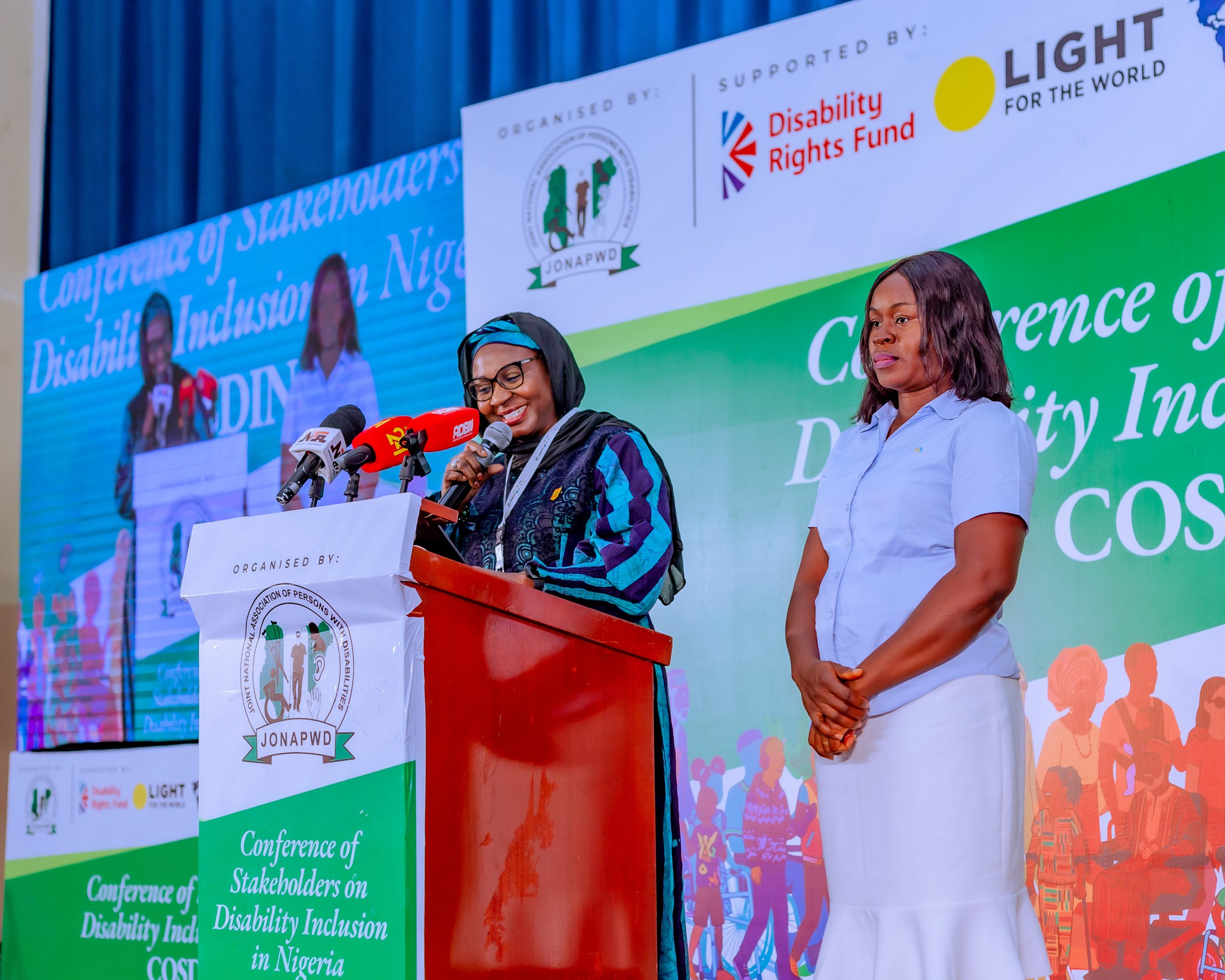
Conference of Stakeholders on Disability Inclusion in Nigeria (COSDIN) 1- 3: What We Should Be Able to Report Beyond 2026
COSDIN 1.0 brought lived experience into a national conversation about accountability. COSDIN 2.0 pressed institutions on implementation. It brought disability clusters together to identify priorities for Nigeria’s Global Disability Summit commitments and opened a conversation on voter registration ahead of 2027. The task for COSDIN 3.0 is to turn that participation into influence over decisions, resources and opportunities. Again some fundamentals:
Where will persons with disabilities exercise decision-making power?
Leadership does not begin when we run for office. It is the opportunity we enable at home, at work, in public, and where we have the duty to care for others. An appointment is worth celebrating. Its influence becomes visible when the appointee can help set the agenda, shape a budget and bring others into leadership. As 2027 approaches, political parties and public institutions should be able to say what they are doing to make candidacy and public office accessible. Those of us who already have a foothold can call in a sister, a brother, share the networks that helped us get there and back persons with disabilities when they seek office. The relationships we have built through years of organising can become formidable socio – political capital for political participation.
Leadership and accountability is also measured in how persons with disabilities engage with the state. And inside JONAPWD, whose priorities carry weight when disability clusters disagree. Where do women, young people, rural citizens, and people with less visible disabilities have real influence? How are service providers – carers, sign language interpreters, teachers and instructors cared for in the community? What is the place of Children of Adults with Disabilities (CODAs)- who have to stand in the gap for their parents because they come into responsibility quite early, to shield their family members? All these are political and so are accountability and leadership markers.
Partnership matters: I salute JONAPWD for the inclusive array of friends it has > gathered. This was strategic to the passage of the law. It remains relevant to elevate > leadership and accountability. Pulling with those also excluded – youth, women who > have less than five percent in the national parliament builds solidarity.
What will public institutions be answerable for?
The relationship with the state should rest on equal citizenship, respect and dignity. A ramp, an interpreter or accessible public information is a practical expression of a public duty. Whether a state has just passed its law or has had one for years, let us ask who is responsible for implementation, what money is available, and where a citizen can seek a remedy. A commitment carries weight when people can check whether it was kept.
Where does education lead?
Ask a young woman who completes an accessible vocational programme what happens the following Monday. Can she apply for a paid placement and enjoy respect and dignity in a space designed and ready for her or she meets with some uncomfortable posturings? Can she get to work and use the tools on the job? If she starts a business, can she open an account and apply for credit independently?
Schools, employers, banks and organisations of persons with disabilities can build those pathways together. Measure who gets hired, who stays in work and who earns an income from an enterprise. Each answer tells us where to act next.
A disability-responsive system anticipates access needs from the start.
This means accessible job adverts and applications, accommodations at interviews, a budget for workplace support, and fair access to training and promotion. In schools, clinics and public offices, it means accessible buildings and information, communication support and a clear route to resolve barriers. It would mean JONAPWD has access to voluntary, privacy-protecting data disaggregated by sex, age, location and functional difficulty to determine who benefits and who is still being missed. With the world pivoting towards technology – this will include access to assistive devices that make life easier for persons with disabilities from schools to society.
JONAPWD’s proposed Ten-Year National Strategic Plan gives our ambition a good horizon. I hope its introduction today helps identify partners for the priorities that members have set. From where I sit in philanthropy, that means listening to organisations of persons with disabilities, valuing their work and recognising the real costs of lack of access. Partners will bring resources and relationships. However, the movement must retain the authority to define its agenda.
Philanthropy should help ensure that the community > remains the driver of the change they seek to see.
At our next gathering, God willing, let us hear from the people who were meant to benefit about what changed in their lives. Before we leave, today, let us agree on a few commitments we can check in 2027, when we gather for the next COSDIN, Deo Volente. Given the markers and challenges shared today. A public agency can report on disability inclusive recruitment; the status of disability and technology, including AI; a state could publish its accessibility budget and the barriers it has removed. In the same light, JONAPWD chapters can bring back evidence of who benefited and whose needs are still being missed.
The state of our young people with disabilities, – digital access, economic prosperity and civic participation matter. The state of our families – care support for children with disabilities and carers, matter. How we are focusing on CODAs matter.
In the final analysis we must test the system
I believe in power within. It is what let’s a person say, “I can lead.” I believe in power with. It is what lets us build together without requiring everyone to have the same experience or agree on every priority. And when we find ourselves in a position to exercise power over others, we should ask whose choices we can widen and whose leadership we can make room for. Are we able to identify with temporary or permanent disability without guilt?
Some of us think disability is a weakness to hide not an identity to embrace. Yet, it happens to many more than we know – take aging for instance.
Let us hold on to one another. We all must be accountable. Hold me to account to do my part to elevate the dignity of persons with disabilities. Celebrate the sister who stood for office. Make time for the brother who needs rest. Build organisations where people can hand over responsibility, recover from a setback and return to the work. We have spent too many years building this movement to make exhaustion defeat us. We no go taya! 20 million Nigerians deserve a voice, they deserve dignity.
We remember where the rain began to beat us. We can name the people who stood with us in the rain and the gains they secured. May the next chapter of the disability community be remembered for the decisions persons with disabilities made, the institutions they shaped, and the people who stood made room and stood with us. Thank you.
References
- Convention on the Rights of Persons with Disabilities, December 13, 2006, 2515 U.N.T.S. 3. United Nations treaty text
- Joint National Association of Persons with Disabilities. (n.d.). COSDIN. Conference overview and reports
- Salihu, A. A. (2026). Leading with our humanity: Elevating our communities through gender equity and social inclusion. Narrative Landscape Press. E-book