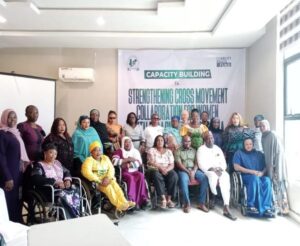
On May 18, 2023, a significant capacity training workshop was held in Abuja, themed “Capacity Building on Strengthening Cross-Movement Collaboration for Women with Disabilities in Nigeria.” This event brought together women leaders from various organizations within the disability movement, including the Association of Women with Disabilities Initiatives (AWWDI), the Network of Women with Albinism, and the Spinal Cord Injuries Association in Nigeria (SCIAN). Participants came from a range of states, including Lagos, Kaduna, Kano, Yobe, Abia, Kwara, Ogun, Bayelsa, Plateau, Gombe, and the Federal Capital Territory.
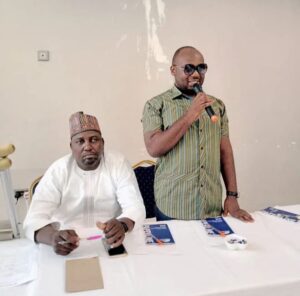
The workshop was honored by the presence of notable dignitaries, including:
Mr. AliYu Usman, National President of JONAPWD
Mr. Theophilus Odaudu, Country Director of DRF/DRAF
Ms. Lois Chinedu, Gender and Inclusion Expert from the International Foundation for Electoral Systems (IFES)
The primary aim of the training was to enhance participants’ understanding of the historical context of the Nigerian women’s movement and to familiarize them with key national and international legal frameworks that protect women’s rights. This included discussions on the revised National Gender Policy, the United Nations Convention on the Rights of Persons with Disabilities (UNCRPD), and the Convention on the Elimination of All Forms of Discrimination Against Women (CEDAW).
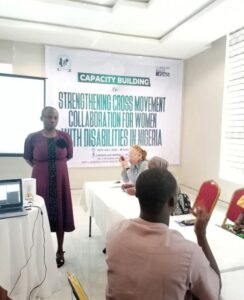
Additionally, the workshop provided effective advocacy strategies crucial for advancing the narratives around the intersections of gender and disabilities in Nigeria.
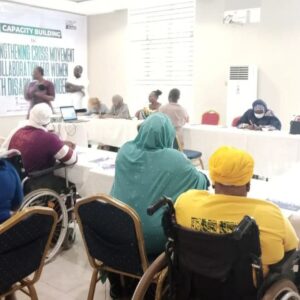
The workshop emphasized that the struggle for women’s recognition and participation in Nigeria dates back to the 19th century. It gained significant momentum during the fight for national independence, where the feminist movement began advocating for equal opportunities for both women and men. Key figures in this movement included:
Queen Amina
Funmilayo Ransome-Kuti
The Aba Women’s Riot of 1929
These pioneers laid the groundwork for the ongoing fight for gender equality and the empowerment of women with disabilities.
An essential component of the workshop was the introduction of a mentorship program designed to empower young women with disabilities. The strategies outlined included:
Equipping young women with disabilities with information and skills to advance the project’s objectives within their communities.
Aligning mentees with current trends in feminism.
Responsibilities of Mentors
The workshop outlined the critical responsibilities of mentors, which included:
Promoting the sustainability of the mentorship program.
Maintaining a safe and professional relationship with mentees.
Assisting mentees in setting and achieving personal and professional goals.
Building mentees’ capacities around programs and events.
Inspiring action on gender and disability-related issues.
Observing and discussing any inconsistencies.
Providing mentees with practical take-home resources.
Outcomes
The workshop successfully fostered a commitment among participants to mentor young women with disabilities. Mentees were selected from various disability clusters, including the Deaf, Blind, Physically challenged, and those with Albinism. This commitment not only strengthens individual capacities but also enhances collective advocacy efforts across the movement.
The capacity training workshop was a pivotal step toward strengthening collaboration among women with disabilities in Nigeria. By equipping participants with essential knowledge and advocacy strategies, the event aimed to empower women leaders and foster a more inclusive and equitable society. The commitment to mentorship will undoubtedly contribute to the ongoing efforts to elevate the voices and rights of women with disabilities in Nigeria.