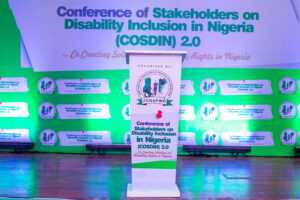
The 2025 Conference of Stakeholders on Disability Inclusion in Nigeria (COSDIN 2.0) took place on November 27 and 28, 2025. Building on the success of last year’s inaugural conference, this year’s theme was “From Commitment to Action: Advancing Disability-Inclusive Development in Nigeria.”

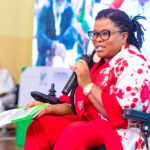
DAY 1:
Day 1 commenced with a recitation of the first stanza of Nigeria’s National Anthem. This was followed by the opening remarks, goodwill messages, and the keynote address.
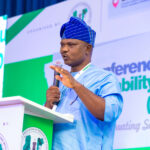

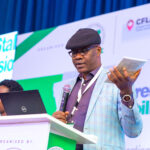
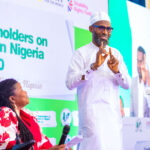
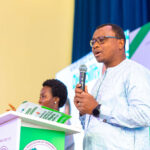
WELCOME REMARKS BY ABDULLAHI A. USMAN, THE NATIONAL PRESIDENT OF THE JOINT NATIONAL ASSOCIATION OF JONAPWD
At the COSDIN 2.0 conference, the National President of JonapwdNational, Abdullahi A. Usman, delivered the opening remarks, setting the tone for a productive and impactful engagement.
In his words “As we welcome everyone here today, we appreciate all stakeholders for their commitment. But commitment alone is not enough — Nigeria and the CSO community must move from the promises made in Geneva to concrete action. We envision a Nigeria where persons with disabilities can fully exercise their rights and live with dignity
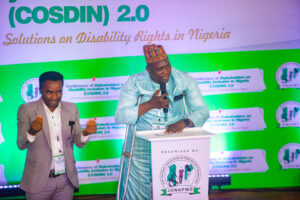
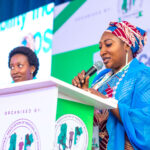
goodwill message of Dr. Sa’adatu Adamu, the founder of Secure the Future International Initiative
In the goodwill message of Dr. Sa’adatu Adamu, the founder of Secure the Future International Initiative, mentioned that:
“Today’s theme, Commitment to Action, is a powerful reminder that we must move beyond talking and start implementing. As we push for disability-inclusive development in education, healthcare, employment, and governance, we must not overlook mental health and psychosocial support. Inclusion must carry everyone along — no one should struggle in silence. I look forward to seeing our commitments evolve into measurable actions that restore hope and transform lives.”
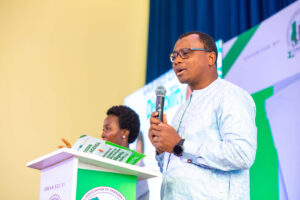
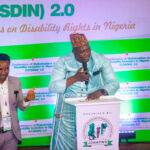
GOODWILL MESSAGE BY Mr. Umar Abdullahi, West Africa Program Manager, for Ford Foundation
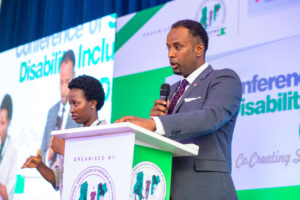
GOODWILL MESSAGE BY OMAR ALIHASHI, The Head of the political team at the Canadian High Commission

Keynote ADDRESS BY Dr. Tayo Aduloju, the Chief Executive Officer, of the Nigerian Economic Summit Group (NESG)
The Renewed Hope Agenda: Where Are We With Persons With Disabilities?
Dr. Tayo Aduloju
Chief Executive Officer, Nigerian Economic Summit Group (NESG)
Distinguished ladies and gentlemen, colleagues, partners, and advocates, It is an honour to address this gathering at the 2025 COSDIN. I speak today not as a defender of the Renewed Hope Agenda—others have already taken on that role—but as the Chief Executive Officer of the Nigerian Economic Summit Group, Nigeria’s foremost private sector, non-governmental, non-partisan think tank. From that vantage point, my duty is simple: to explain what is in the Renewed Hope Agenda, to identify where the agenda for persons with disabilities fits, and to point out the gaps that must be addressed.
I had hoped that the Honourable Minister of State for Humanitarian Affairs, Dr. Nkrumah, would be here as we navigate these gaps together, but I am sure the ministry is well represented and will engage with these insights in the spirit of collaboration.
As many have rightly noted, the United Nations Convention on the Rights of Persons with Disabilities (UNCRPD) is not new. It was launched almost twenty years ago, and countries—including Nigeria—have since domesticated it.
So yes: The global convention is in place.
Nigeria’s legal framework is in place.
Yet the theme of this conference makes a critical point:
The problem is not the framework; it is the commitment to action.
When discussing genuine commitment to disability inclusion, we must acknowledge at least three core components, beginning with the most foundational: social inclusion.
a. Social Inclusion
The Convention recognizes a sobering truth: for much of human history, the instinct of the “survival of the fittest” shaped societal attitudes. Humanity’s primitive tendencies were punitive to persons with disabilities.
In some pre-modern cultural contexts, a disability was even considered a mark for death.
Thankfully, that is no longer our reality. Yet old attitudes linger—woven into:
Cultural norms
Political systems
Religious doctrines
Community practices
Public services such as health, education, transportation, the environment, and broader anti-discrimination mechanisms
Our advocacy today must therefore be anchored on removing the stubborn barriers to social inclusion that persist across these domains.
b. Commitment Without Involvement Is Insufficient
Commitment cannot be meaningful without involvement.
And here, I must offer a personal confession: even those of us with disabilities can have paradigm blindness.
Not long ago, I invited some of my colleagues and leaders to audit my own summit. It was a humbling reminder that inclusion is not instinctive—it is intentional. It must be designed, questioned, tested, and co-created.
The conference aimed to foster dialogue and collaboration among key stakeholders in the disability sector, including government officials, civil society organizations, private sector leaders, development partners, and organizations of persons with disabilities (OPDs). It emphasized the importance of actionable strategies to promote inclusive policies and practices across the nation.
This significant event also served to advance accountability for the implementation of disability rights commitments while commemorating the International Day of Persons with Disabilities (IDPD)
he Renewed Hope Agenda contains broad national aspirations—economic diversification, human capital development, social protection, and inclusive growth. But where do persons with disabilities fit into these priorities?
They fit in everywhere inclusion is promised, but nowhere enough in the details.
They appear in policy conversations, but too little in budget lines, implementation plans, and accountability frameworks.
This is the gap we must confront—not with blame, but with resolve. The Renewed Hope Agenda cannot deliver hope if it leaves millions of citizens behind. Inclusion must move from a moral imperative to a measurable policy action.
To make progress, we need:
A national commitment that translates beyond rhetoric into enforceable implementation.
Cross-ministerial collaboration, not isolated initiatives.
Private sector alignment, as inclusion is also an economic growth strategy.
Continuous auditing and lived-experience participation, because policies cannot assume what they have not consulted.
And above all:
We need to remove the social, cultural, political, and infrastructural barriers that continue to marginalize Nigerians with disabilities.
The Renewed Hope Agenda presents an opportunity—a promise of a Nigeria where every citizen has the space to contribute and thrive. But opportunity without inclusion becomes exclusion. Framework without action becomes frustration. Vision without implementation becomes rhetoric.
Today, I invite us all—government, private sector, civil society, communities, and individuals—to move from commitment to concerted action.
That is how we will finally realize a Nigeria where persons with disabilities are not accommodated out of charity, but included out of justice.
Thank you.
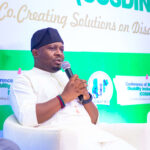
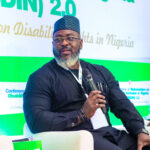
PANEL DISCUSSION 1:
DISABILITY RIGHTS MOVEMENT IN NIGERIA: WHERE ARE WE WITH PERSONS WITH DISABILTIES
Moderator: Barrister Paul Ihekwoaba
Panelists: Dr. Tayo Adulujo, Chief Executive Officer – Nigerian Economic Summit Group (NESG); Mr. Daniel Dalyop, representing the Honourable Speaker for Humanitarian Affairs and Poverty Reduction; and Mr. Abdullahi A. Usman, the National President for JONAPWD
The panel session highlighted significant concerns regarding the exclusion of persons with disabilities from government policy design. Mr. Daniel Dalyop, representing The Honourable Minister of Humanitarian Affairs and Poverty Reduction, Dr. Bernard M. Doro, emphasized the need for people with disabilities to be actively involved in discussions that affect them, stating, “You cannot shave a man in his absence.” This sentiment underscores the importance of having accurate data to inform effective interventions, as the Ministry plans to develop a robust Social Information Register to capture essential details about the population.
A major focus of the discussion was the accessibility of private sector spaces. Barrister Ihekwoaba Paul pointed out that many businesses operate under the misconception that they are exempt from the Disability Act. He stressed a collaborative approach to disability inclusion, insisting that “The plan is not the Act. The plan must have real milestones and enforcement.”
Inadequate cultural attitudes and systemic issues were identified as barriers, highlighting the need for heightened public awareness and accountability in the private sector.
The discussion further emphasized the necessity of moving away from a charity-based model towards inclusive policies that allow for genuine participation from people with disabilities. This shift is crucial to developing effective, long-term solutions that promote empowerment and independence instead of reliance on humanitarian aid.
Ultimately, the panel underscored the government’s commitment to creating a unified disability policy. By fostering collaboration among various stakeholders and enhancing regulatory frameworks, the aim is to ensure that people with disabilities are integrated into all facets of society, from policy-making to practical implementation.
Day 2
Day 2 began with a continued commitment to the national anthem and included insightful sessions from various service providers.
Session Details:
-
Service Provider Presentation: Representatives from Sterling Bank shared available services tailored for individuals with disabilities.
-
Advancing Responsive Digital Accessibility: A session addressing the importance of creating inclusive digital spaces for survivors of gender-based violence, presented by Miss Neesah Flooring.
-
Nigeria’s Commitment to 2025: A focused discussion on converting policy pages into actionable practices, tackling the integration of persons with disabilities into development strategies.
-
Awards and Recognitions: An awards session honored outstanding contributions in the disability rights movement, specifically recognizing Theophilus from the Disability Rights Fund.
Conference Support
The conference was supported by the Ford Foundation, Macarthur Foundation, Light for the World, High Commision of Canada to Nigeria and the Disability Rights Fund, highlighting the collaborative efforts necessary to foster a more inclusive Nigeria.