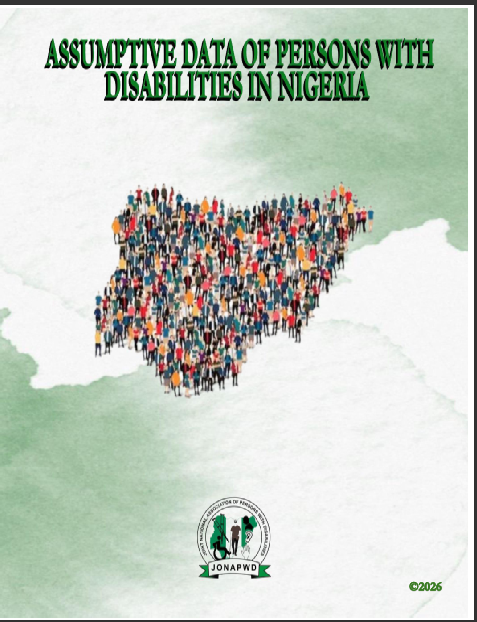
Disability Inclusion: Democracy, it is often said, is government of the people, by the people, and for the people. Yet, democracy is not truly inclusive until it is accessible. For millions of Nigerians with disabilities, participation in the democratic process—whether as voters, candidates, or election officials—still comes with significant barriers.
This reality formed the basis of a recent interactive social media live chat focused on expanding access to inclusive democratic spaces for persons with disabilitie in Nigeria. The conversation featured disability rights advocate, Grace Jerry, Executive Director of the Inclusive Friends Association, and reflected on observations from the recently concluded FCT Area Council elections whcih took place on the 21st of February 2026.
From Advocacy to Action: The Journey So Far
Since 2016, the Inclusive Friends Association has been at the forefront of pushing for inclusive governance and electoral participation. Through accessibility audits and evidence-based research, the organisation has documented the barriers this demographic face during elections—ranging from inaccessible polling units to the absence of assistive voting materials.
This advocacy aligns with Nigeria’s legal commitments. The country has enacted the Discrimination Against Persons with Disabilities (Prohibition) Act 2018 and ratified the United Nations Convention on the Rights of Persons with Disabilities (CRPD). Article 29 of the Convention guarantees political participation for persons with disabilities, including the right to vote and be elected.
Additionally, provisions within Nigeria’s Electoral Act mandate the electoral body to provide assistive materials to ensure that voters with disabilities can cast their ballots independently and in secrecy.
On paper, the frameworks exist. In practice, however, gaps remain.
Observations from the FCT Area Council Election
As members of the civil society election observation network, disability rights advocates monitored polling units across the Federal Capital Territory, including AMAC, Kuje, and Bwari.
What Worked
- One commendable effort was the deployment of the EC30-EPWD poster designed to assist deaf voters. These posters were visibly displayed in several polling units, signaling sustained attention to inclusive communication.
- Another positive development was the inclusion of persons with disabilities as ad hoc staff. Observers noted, for example, a deaf woman serving as an election official—an encouraging sign that inclusion is gradually being practiced, not just discussed.
In some locations, such as the disability community in Karamajiji, polling units were set up in relatively accessible environments, with ramps and layouts that enabled wheelchair users and other voters with mobility impairments to navigate the space more easily.
The Gaps
Despite these improvements, significant shortcomings were observed:
- Absence of Braille Ballot Guides: Visually impaired voters in several polling units could not find Braille ballot guides, which had been piloted in previous elections.
- Lack of Magnifying Glasses: Voters with albinism or low vision were unable to access magnifying devices to assist them in reading ballots.
- Compromised Ballot Secrecy: In one case, a visually impaired voter who arrived without an assistant had to rely on another voter—and in another instance, a party agent—to help cast his ballot. This raises serious concerns about the independence and secrecy of votes.
- The absence of assistive materials forced some voters with disabilities to depend on others, undermining both their autonomy and the integrity of the electoral process.
From Framework to Implementation
Ahead of the election, the electoral commission had reportedly committed to deploying assistive materials to 1,200 targeted polling units with registered persons with disabilities voters. However, field observations suggest that this commitment was not fully realized in practice.
This disconnect between policy assurances and on-ground implementation highlights a recurring issue: moving from framework to action.
Advocacy efforts have already influenced institutional reforms. For instance, disability-focused organisations have contributed to revising election training manuals to include guidance on assisting voters with disabilities. These provisions are now institutionalised, meaning they should outlast changes in leadership within the electoral body.
Yet, institutionalisation must be matched by accountability and effective deployment strategies.
Political Parties and the “Vulnerable” Label
Beyond election-day logistics, the conversation also addressed how political parties frame disability issues in their manifestos. Often, persons with disabilities are grouped under the broad category of “vulnerable populations,” alongside women, youth, and the elderly.
While well-intentioned, this generalisation risks diluting targeted interventions. The needs of persons with disabilities are distinct and require tailored policies—ranging from accessible campaign materials to inclusive candidate nomination processes.
True inclusion demands specificity, not broad labels.
Looking Ahead to 2027
The FCT Area Council election serves as a litmus test ahead of the 2027 general elections. It offers an opportunity to:
- Audit what worked and what failed in assistive material deployment.
- Strengthen communication channels between the electoral commission and disability communities.
- Ensure full compliance with Section 52 of the Electoral Act regarding assistive devices.
- Expand the recruitment of persons with disabilities as election officials.
- Enhance monitoring, documentation, and stakeholder engagement.
Civil society organisations, including the Inclusive Friends Association and partners, have pledged to continue documenting evidence from the field and engaging electoral stakeholders constructively.
Nothing About Us Without Us
At the heart of the conversation was a powerful principle: Nothing about us without us.
Inclusive democracy requires the active participation of persons with disabilities—not just as beneficiaries of policy, but as architects of reform, observers of process, election officials, and political actors.
As Nigeria prepares for future elections, the question is no longer whether inclusion is necessary. The legal and moral case is clear. The challenge now is ensuring that every polling unit, every ballot, and every electoral process reflects that commitment in practice.
Because democracy is not inclusive until it is accessible—and accessibility must be intentional, practical, and visible.
Culled from the Facebook Live on “Expanding Access to Inclusive Democratic Spaces for Persons with Disabilities in Nigeria” with the Executive Director of the Inclusive Friends Association (IFA)