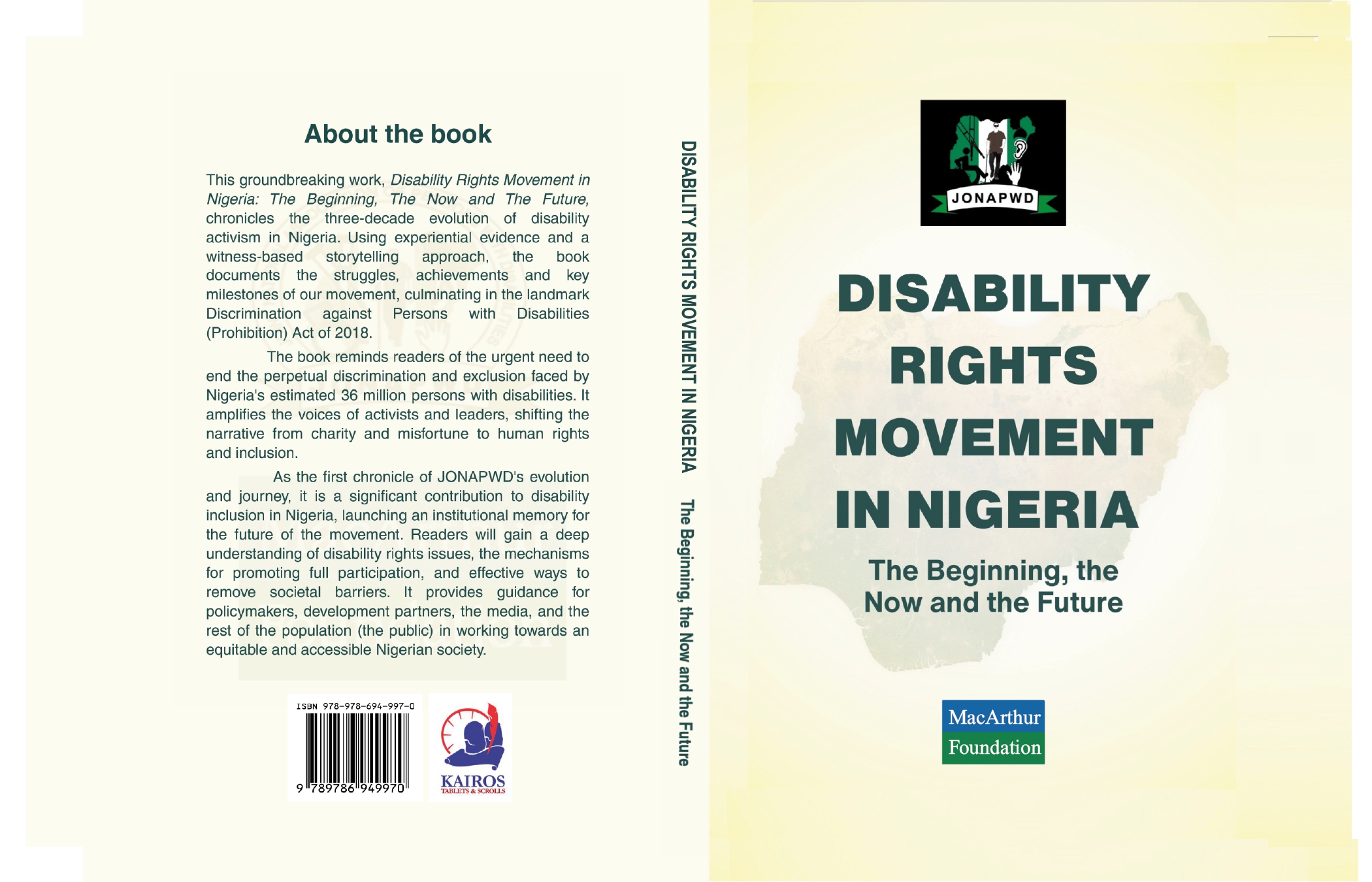
The Joint National Association of Persons with Disabilities (JONAPWD) has completed a school accessibility project across six states, Edo, Sokoto, Osun, Oyo, Plateau and the Federal Capital Territory, delivering ramps, accessible toilet facilities and corridor handrails to public schools as part of a broader push to make inclusive education a reality rather than a promise.


The project, supported by the Ford Foundation, follows the same design in every location: identify a public school with significant barriers to access, retrofit it with the physical infrastructure that pupils and staff with disabilities need to move safely and independently, and hand the completed facility over to the school community.


A Model Tested Across Six States
In the Federal Capital Territory, the project reached LEA Primary School, Karomajiji, in the Abuja Municipal Area Council, where JONAPWD commissioned an accessible toilet facility and corridor handrails. The school’s acting headmaster, Shaibu Ahmed, said the intervention would benefit no fewer than 250 pupils and described it as long awaited, noting that earlier promises of support from other quarters had not materialised.
In Edo State, the work extended to the tertiary level. JONAPWD’s national leadership, led by National President Abdullahi Usman, visited Ambrose Alli University in Ekpoma, where newly completed wheelchair ramps, internal walkways and accessible toilets were formally handed over at the university’s Dangote Hostel. The Vice-Chancellor, Professor Mrs. E. E. Omonzogie, received the keys to the facility and committed the university to establishing a Disability Desk Office and expanding access to assistive devices for students and staff living with disabilities.


The same model, adapted to local school needs, was carried out in Sokoto, Osun, Oyo and Plateau states, giving pupils with disabilities in each location safer, more dignified access to their own classrooms and school compounds.
Why the Project Matters
Speaking at the FCT event, Usman used the occasion to press a wider point: Nigeria’s disability rights law is not short on ambition, only on enforcement. The Discrimination Against Persons with Disabilities (Prohibition) Act was signed in 2018, but Usman said compliance among ministries, departments and agencies remains weak, leaving millions of Nigerians with disabilities without equal access to public services and opportunities.
He called on ministers, permanent secretaries, directors-general and heads of agencies at every level of government to enforce the law, and urged the AMAC Chairman specifically to replicate the Karomajiji model across all schools in the council. The appeal was not limited to Abuja. Usman said the six-state project was designed to prove a point: that inclusive infrastructure is achievable in ordinary public schools, not just in showcase institutions, and that governments at federal, state and local level have no excuse not to replicate it.
What Comes Next
Both the AMAC headmaster and the Edo State university administration flagged further needs beyond what this project covered, from damaged perimeter gates and broken classroom windows to a shortage of desks and assistive devices such as wheelchairs and specialised laptops. JONAPWD has pointed to these gaps as evidence that accessibility work in Nigerian schools is only beginning, and that the six-state campaign should serve as a template rather than an endpoint.
For JONAPWD, the project stands as proof that persons with disabilities can be met with dignity in the spaces where Nigerian children learn, and a reminder to duty bearers at every level that the law already requires it.